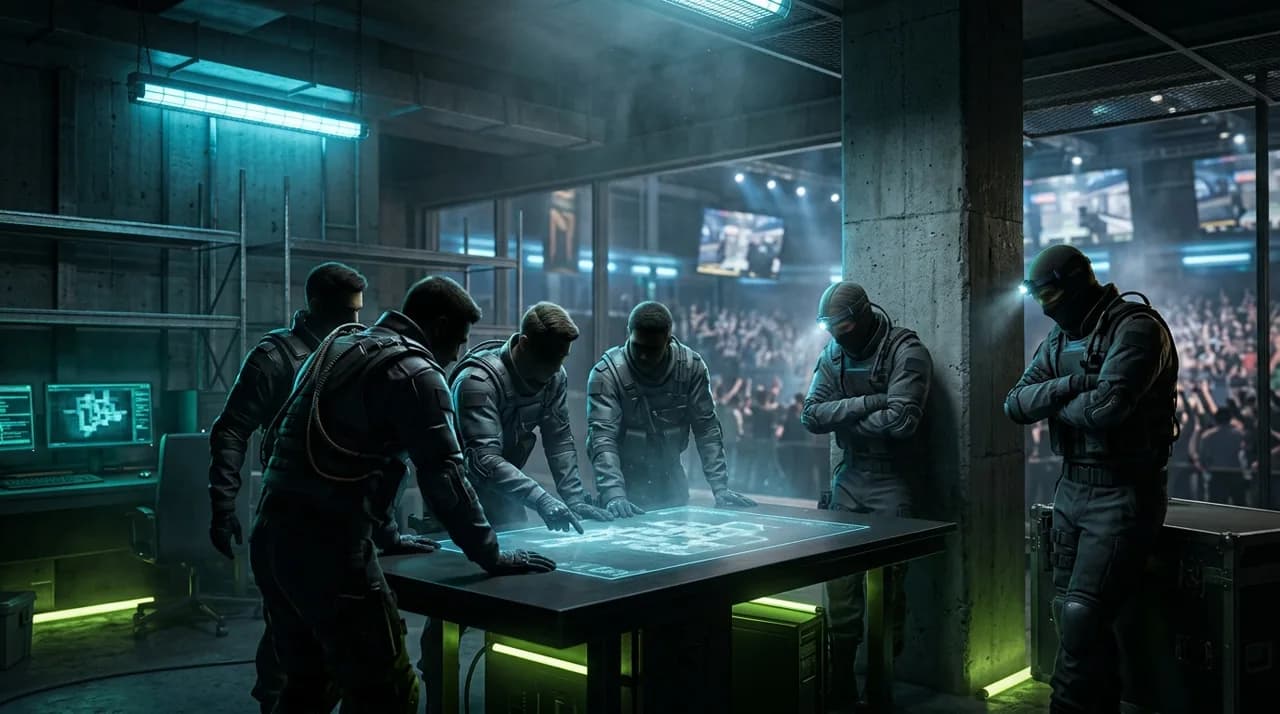
Performance management in esports remains far behind traditional sports, where athletes have access to nutritionists, physiotherapists, and specialized coaches. While Astralis popularized the concept during their dominant run, the role continues to evolve as teams chase sustained excellence.
Jack Birtwhistle arrived at Vitality in November 2023 with five years of professional rugby experience but virtually no esports background. His timing was fortuitous—the French organization had just claimed the BLAST.tv Paris Major and would close the year with consecutive championship victories.
However, early 2024 brought challenges. Despite consistent playoff appearances and an IEM Cologne victory, internal conflicts with Lotan "Spinx" Giladi created friction. Birtwhistle describes his role as a "sherpa"—guiding players toward solutions without forcing outcomes. When Spinx decided his future lay elsewhere, the team maintained professionalism while acknowledging the inevitable roster change.
Robin "ropz" Kool's January 2025 arrival transformed everything. Vitality embarked on a historic 30-match winning streak, capturing seven consecutive tournaments including the BLAST.tv Austin Major. Birtwhistle introduced "theming," drawing from Tom Brady's "The Man in the Arena" documentary. The concept emphasized process over outcomes, teaching players that legendary dynasties are measured by cumulative success rather than isolated failures.
The Australian implemented simple feedback systems—Google forms with traffic light indicators—recognizing that detailed analytics can overwhelm young competitors. Regular check-ins tracked team values and individual confidence across map pools, creating ongoing dialogue without excessive complexity.
Perfection became problematic post-Austin. After a 37-series unbeaten start, losses to MOUZ and The MongolZ exposed cracks. Birtwhistle identifies the core issue: lack of humility. When flawlessness becomes the baseline expectation, normal competitive setbacks trigger disproportionate frustration.
Vitality rebounded at ESL Pro League Season 22 and dominated the StarLadder Budapest Major with championship confidence matching their Austin triumph. The 2026 campaign began similarly dominant—five straight titles including another Intel Grand Slam—but extended practice breaks before the Cologne Major proved costly. The staff realized they hadn't explicitly communicated expectations about maintaining individual sharpness during downtime.
Following their BLAST Bounty elimination, Vitality restructured their approach. Borrowing from rugby's concept of "managing the gray"—unscheduled calendar time—coaches now provide more structured sessions while maintaining accountability. This balances player autonomy with collective alignment, ensuring everyone stays connected to team objectives.
Birtwhistle emphasizes that players generate 99% of success; his contribution is the marginal 1% that unlocks peak performance. As Vitality prepares for Esports World Cup, that philosophy continues guiding one of Counter-Strike's most accomplished organizations.


